
Tok Residents Directory Search
Use the Tok Residents Directory when you need to move from a name, a route clue, or a record note to the office that actually holds the file. Tok sits in Southeast Fairbanks Census Area, so there is no borough government to work through first. That means the search usually moves straight to the Alaska Court System, Alaska State Troopers, or a state office that keeps the record. A Tok Residents Directory search works best when the clue stays tied to the right record type and the right public source from the start.
Tok Residents Directory Basics
Tok is one of the Southeast Fairbanks communities that depends on a state-led record path. There is no borough desk to sort the search for you. So the first move is to decide what the clue actually points to. A case number goes to the court system. A service note goes to Alaska State Troopers. A birth, death, marriage, or business trail goes to a state office. That early split keeps a Tok Residents Directory search short, direct, and easier to trust.
The Alaska Court System home page at courts.alaska.gov and the statewide CourtView portal at courts.alaska.gov/main/search-cases.htm are the first court pages to check when the Tok clue looks like a case. Those pages handle Alaska's unified court structure and let you search by party name, case number, or citation. That helps when you only have part of a name or a rough date. It also keeps the Tok Residents Directory search tied to the official case index instead of a broad web result.
Tok can also sit in the middle of a longer interior search route. Even so, the rule does not change. Find the record holder first. Then follow the file. That is the cleanest way to avoid dead ends when the local clue is thin or the office is outside the town itself.
Tok Residents Directory Court Records
For Tok court work, the Fourth Judicial District is the right court frame. CourtView at courts.alaska.gov/main/search-cases.htm gives the first public look at many Alaska cases, including civil, criminal, family, probate, traffic, and small claims matters. It is useful, but it is not the full case file. Some records never appear online, and some are removed later under court rule, statute, or court order. That means Tok Residents Directory searches should treat CourtView as the index, not as the finish line.
The CourtView page at courts.alaska.gov/main/search-cases.htm is also the best visual anchor for the court part of a Tok search.
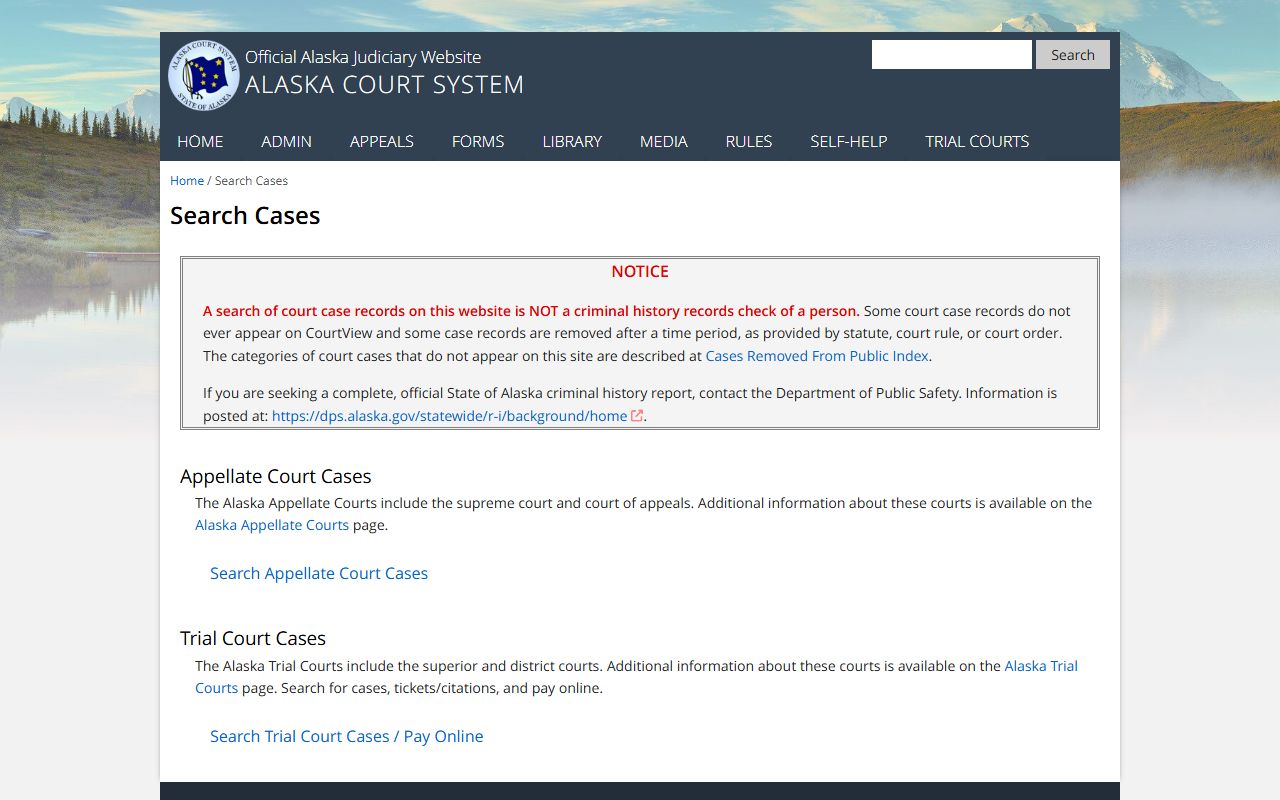
That portal fits Tok because the search often begins with a name or citation and then moves to the statewide case index before any clerk contact is needed.
The Alaska Court System home page at courts.alaska.gov gives forms, contacts, and general guidance when the case is not fully shown online. It also reminds the searcher that some matters are restricted or sealed, while older records may still live in paper form. If a Tok file is not visible in CourtView, the clerk office is still the right next step. That is especially true for older cases or files that were never fully digitized.
The Alaska Court System home page at courts.alaska.gov is the broader anchor for the court side of the search.
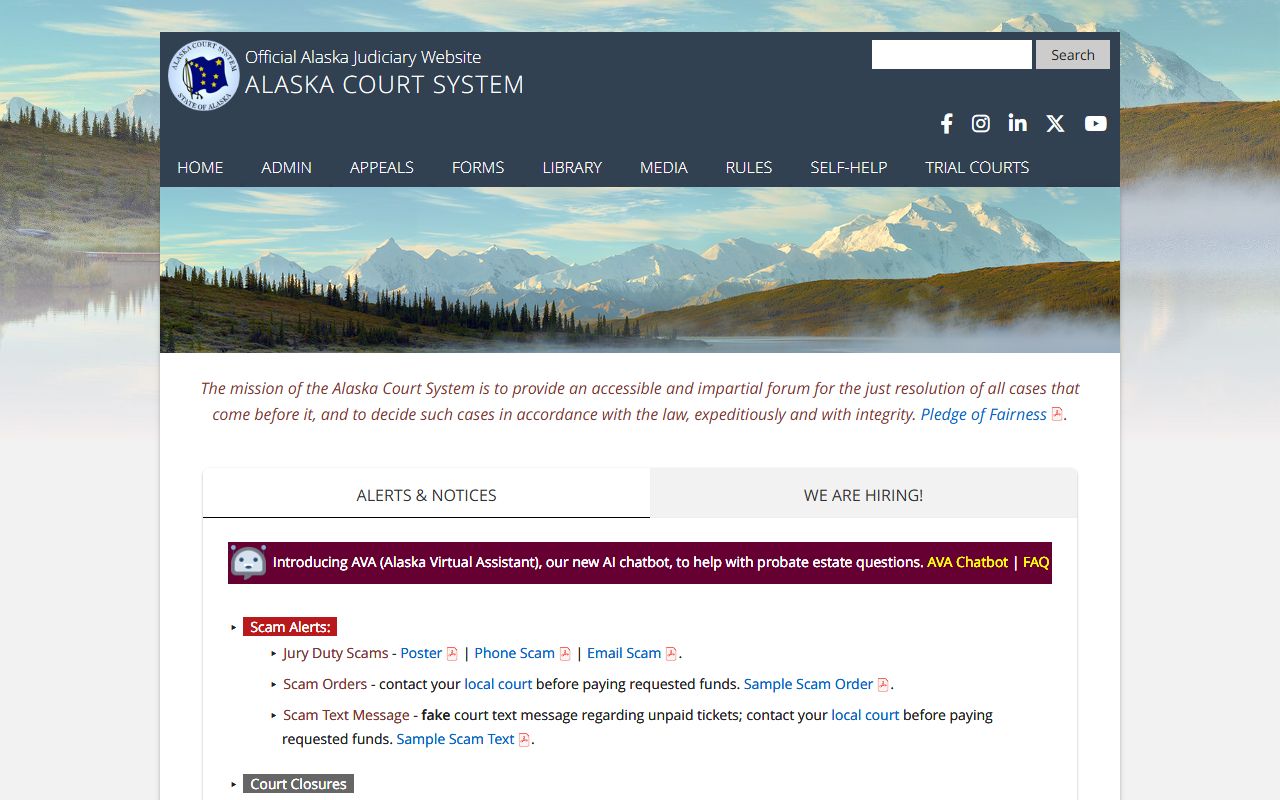
That image fits Tok because every court search in the area still runs through the unified Alaska court system, even when the final file is held by a clerk rather than visible online.
Some remote Alaska communities are served by visiting judges on scheduled court days, so it helps to stay flexible. A Tok Residents Directory search can still begin online and end with a clerk or courthouse contact. That is normal. The public index, the clerk office, and the statewide court page all work together.
Tok Residents Directory and Public Safety
Public safety in Tok is handled through Alaska State Troopers, so the Department of Public Safety is the official route when a clue points to an incident, a complaint, or a response record. The trooper contact page at dps.alaska.gov/AST/Contacts is the best general starting point. It gives dispatch and contact information without pushing the search into a local office that does not hold the record.
A Tok Residents Directory search can shift into public safety quickly. A traffic event, a field contact, or a service report may belong with troopers rather than a court clerk. That is why the record type matters so much. If the clue sounds like a safety matter, the trooper page is the right source. If the clue sounds like a case, stay with CourtView or the court pages instead.
The same logic keeps the search clean when the public safety event happened far from a city desk. Tok is not supported by a borough government, so trooper contacts often become the shortest path to the right agency. That is the value of a careful Tok Residents Directory page. It shows the official source before the search gets lost in search-engine noise.
Tok Residents Directory and State Records
Some Tok searches turn into state record requests. Health Analytics and Vital Records at health.alaska.gov/en/division-of-public-health/health-analytics-vital-records/ is the official source for birth, death, marriage, divorce, and amendment records. The orders page at health.alaska.gov/en/services/vital-records-orders/ explains how those requests move through the system. When a Tok Residents Directory search is personal or family related, those state pages belong in the path right away.
Business and licensing searches also move to state systems. The Alaska Corporations database at corporations.alaska.gov is the main place to check entity names, registered agents, and filed documents. The Division of Corporations, Business and Professional Licensing at www.commerce.alaska.gov/web/cbpl/ adds the licensing side of the search when a Tok clue belongs to a business or a licensed trade. That keeps the request on an official track instead of a random directory page.
Unclaimed property is another useful state path. The Alaska Unclaimed Property site at unclaimedproperty.alaska.gov/ and the Treasury Division page at treasury.dor.alaska.gov/ explain how owners and heirs can look for funds or property held by the state. That can matter when a Tok name or address shows up in a claim trail instead of a city record. The file still belongs to Alaska even if it no longer belongs to a local office.
For public access context, the Alaska Legislature at www.akleg.gov/ and the Open Government Guide for Alaska at www.rcfp.org/open-government-guide/alaska/ help explain how records access works. If a Tok search turns into a law or policy question, the Alaska bill page at akleg.gov/basis/Bill/Text/33?Hsid=HB0028A is a good public reference to keep nearby. It does not replace the record holder. It helps frame the rules around access.
Tok Residents Directory Hub Context
Tok often sits on the edge of a longer interior search path, and that can make the first step feel uncertain. Delta Junction is a common regional reference point in Southeast Fairbanks, but it is still just a hub, not the record office. The same is true of any nearby city name. The record belongs to the office that created it, and the Tok Residents Directory search works best when it keeps that distinction clear.
The practical rule is simple. Use CourtView for cases. Use Alaska State Troopers for incidents and service calls. Use state offices for certificates, filings, and claims. If the clue is old, sealed, or missing online, use the court clerk next. That sequence stays reliable in Tok because the community follows the same statewide structure as the rest of Southeast Fairbanks Census Area.
Once the clue is matched to the right source, the search gets much easier. That is the value of the Tok Residents Directory page. It gives one office to check, one record type to follow, and one clear path to the file you need.