
Search Nome Residents Directory
The Nome Residents Directory helps you move from a name, address, or case clue to the right office in less time. Nome is a regional hub, so the record you need may sit with the City of Nome, the Nome Courthouse, or a state office that serves the area. That is why the first step matters. Start with the holder of the record, then narrow the search to the person, date, file type, or place you already know. This page keeps the path simple so a city record, court file, or state certificate can be found without guesswork.
Nome Residents Directory and city records
The City of Nome website at https://www.nomealaska.org/ is the first local stop for city services, notices, and hub information. When a Nome Residents Directory search starts with a street, board, office, or public contact, the city site helps you see whether the answer belongs to municipal government or needs a wider state search. That split matters in Nome because the city serves as a hub for the region. A clean local search can save time before you move to court records or state files.
City pages are most useful when the clue is small but real. A meeting date, a department name, a local notice, or a service question can point you to the right page fast. If the record is not on the city site, that does not mean it is gone. It often means the file lives with the court, a state office, or another agency that serves Nome from elsewhere in Alaska. Nome Residents Directory works best when you let that local clue guide the first turn and then follow the record where it actually lives.
For broad public records guidance, the Alaska Open Government Guide at https://www.rcfp.org/open-government-guide/alaska/ is a useful plain-language reference. It helps explain how Alaska public access works when a city document, a state file, or a mixed record trail is involved. The Alaska Legislature site at https://www.akleg.gov/ also matters because local issues often appear in bills, journals, or committee material once they reach the state level. That kind of context can help you frame a better request and cut down on back and forth.
- City of Nome for local services, notices, and contact paths
- Open Government Guide for public records guidance in plain terms
- Alaska Legislature for bills, journals, and committee records
The city site is still the best starting point when you know the issue is local. It gives you the shortest route to the right desk. That matters when the search clue is thin and you want to avoid a long loop through the wrong office.
Nome court records and CourtView
The Nome Courthouse serves the region at https://courts.alaska.gov/courts/nom.htm. That page is the best court entry point for a Nome Residents Directory search when you need trial court information, clerk contacts, or a place to begin a case check. Nome is in Alaska's Second Judicial District, so the courthouse often becomes the right public stop when a local clue turns into a civil, criminal, probate, family, or traffic matter. If you already have a party name or case number, start there first.
For a broader search, use CourtView at https://courts.alaska.gov/main/search-cases.htm. CourtView is the statewide case search portal, and it is the fastest way to look for a public case name, status, hearing, or ticket number before you call the clerk. The Alaska Court System home page at https://courts.alaska.gov/ gives you the broader court frame, while CourtView gives you the search itself. That split works well in Nome because a lot of searches begin locally and end with a statewide court file.
CourtView is useful, but it is not a full criminal history check. It shows public case information, not every record a person may have. Some matters never appear online, and some records are removed later under court rule, statute, or court order. Juvenile matters, some family cases, mental health cases, and sealed files also stay out of public view. If you need a complete file or a document that is not online, the clerk's office at the Nome courthouse is the place to ask next. That is often the difference between a partial search and a useful one.
The court system also helps when the case is old. CourtView holds many records from about 1990 forward, but older paper files may need clerk help. That is useful in Nome because the public search can point you to the right courthouse even when the online index is thin. If the case does not show up, the clerk can tell you whether the file is sealed, archived, or held in paper form. Nome Residents Directory searches stay stronger when you treat CourtView as the first look and the courthouse as the record holder.
The same approach works for court copies. Search first, then ask for the exact file or hearing record you need. The less you guess, the cleaner the request.
Nome Residents Directory and state records
Some Nome searches leave the city fast and move to the state. Health Analytics and Vital Records at https://health.alaska.gov/en/division-of-public-health/health-analytics-vital-records/ is the main source for birth, death, marriage, and divorce certificates. The vital records orders page explains how people place requests and what the state accepts. In a Nome Residents Directory search, that matters when you need a certified record, a family record, or a document that no city office keeps. The state is the custodian, so the request belongs there.
Vital records are also limited by age and privacy. Birth records are not public until after 100 years, and marriage, divorce, and death records become public after 50 years. During the restricted period, only certain people can request them. That is normal in Alaska, and it helps keep a search focused on the right office and the right person. When Nome residents need proof of identity or family history, the state page is the right place to start instead of a local desk that cannot release the record.
Business and licensing searches also move to state systems. The Alaska Corporations database at https://corporations.alaska.gov/ lets you search by entity name, entity number, registered agent, or official's name. The Division of Corporations, Business and Professional Licensing at https://www.commerce.alaska.gov/web/cbpl/ adds business license and professional license tools. Those pages help when a Nome clue belongs to a company, contractor, licensed trade, or other filed entity instead of a household record. A directory search gets clearer once you know which kind of record you are holding.
Unclaimed property is another useful state trail. The Alaska Unclaimed Property program at https://unclaimedproperty.alaska.gov/ searches for missing funds, stock, deposits, and other property that went unclaimed. The Treasury Division at https://treasury.dor.alaska.gov/ explains the program and its role in safeguarding owner funds. The program is authorized by AS 34.45 and 15 AAC 150, and owners or heirs can search for free by name, city, or property ID. That makes it a practical follow-up when a Nome name appears in a claim trail rather than a city file.
- Health Analytics and Vital Records for certificates and certified copies
- Vital records orders for request methods and order help
- Alaska Corporations for business entity searches and filed documents
- CBPL for business and professional licensing
- Unclaimed property for owner and heir searches
- Treasury Division for the state program that holds unclaimed funds
The state pages are also where Nome searches go when the local office cannot release the file. That is common enough that it should feel normal, not like a dead end. The record still exists, it just lives in a different system.
Nome Residents Directory works best when the search moves in this order: local site, court portal, then the state record source that matches the clue. That keeps the trail short and the result easier to trust.
Nome court image and next steps
The Alaska Court System CourtView portal at https://courts.alaska.gov/main/search-cases.htm is the right visual cue when a Nome search turns on a case number, party name, or hearing date. CourtView shows the public first look, which is usually the fastest way to see whether a case is active, closed, or tied to the Nome courthouse.
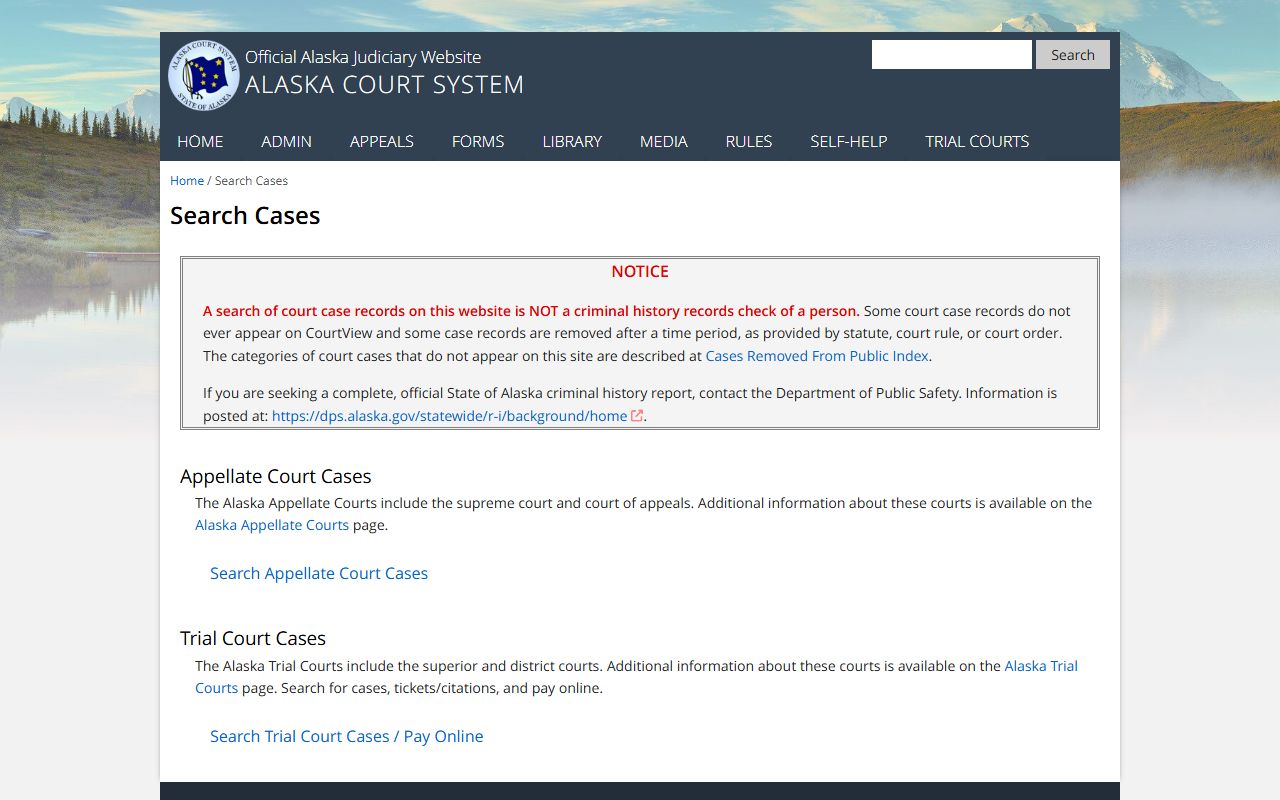
That state fallback image fits a Nome Residents Directory page because court work often starts local and then moves to the statewide case search. When the clue is thin, the image reminds you to check the court system before you assume the record is missing.
For a quick review, start with the City of Nome if the issue looks local, then move to the Nome Courthouse if the clue points to a case. If the file is a certificate, business record, or claim, shift to the right state page and keep the request tight. Alaska State Troopers provide law enforcement in the region, so some public safety matters may also leave the city desk and move to a state contact instead. The key is to match the clue to the office that actually holds the record.
That approach keeps a Nome Residents Directory search practical. It gives you one place to begin, one office to check next, and one clean path to the record you want.